Melanau (Adat Bebayuh)

The Melanau are considered among the earliest settlers in Sarawak. The name Melanau was not used by the Melanau to refer to themselves until recently. They call themselves a-likou meaning 'people of the river'. Legend has it that the name Melanau was given by one of the Sultans of Brunei to the inhabitants of the coastal swamp flats and riverbanks of central Sarawak.
The Melanau live in a low-lying swampy plain covered by dense tropical forest in the coastal region of Sarawak. They are mostly located in and near the towns of Mukah, Matu, Daro, Dalat, Bintulu, Kanowit, and Sibu.
Orang ulu (suku kedayan) : (adat makan tahun)

The Kedayan tribe's New Year's Eating tradition needs to be maintained and promoted because it is a unique identity for the tribe The Annual Meal event held every year by the Kedayan people in the north of the state not only symbolizes the unique traditions inherited by the Kedayan people here but also serves as a platform for them to strengthen their kinship ties.
Among the popular foods served at Makan Tahun are kelupis, traditional sweets alongside various side dishes.
The Kedayan people are an ethnic group whose majority reside in the north of the state such as Miri, Limbang and Lawas with a total population that also speaks the Kedayan language is around 37,000 people throughout the state.
Bidayuh (Suku Selako) : Ngoncong
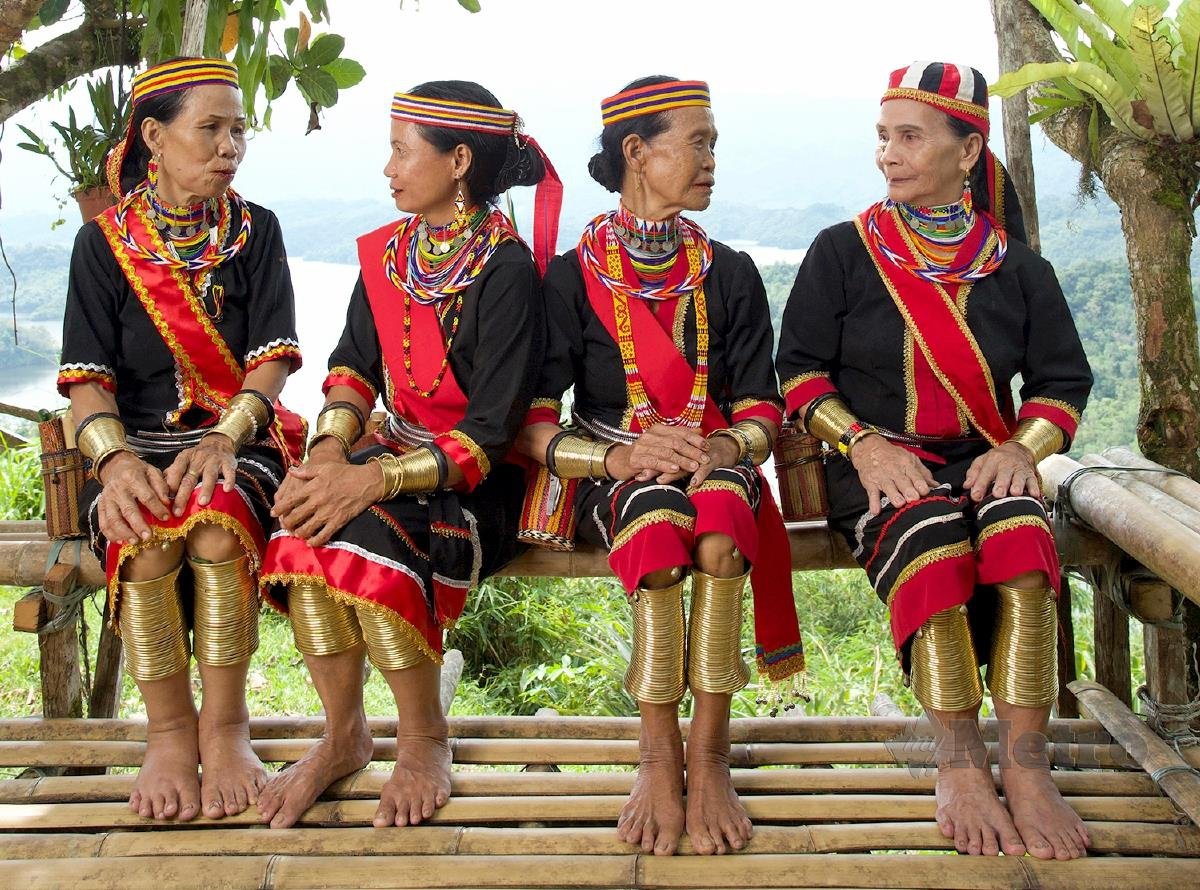
The Bidayuh Salako community is one of the unique tribes found in Sarawak, especially in Lundu. The community greatly admires their culture and customs. One of the cultures that is still practiced is known as 'Ngoncong' which has been practiced since 1875 which is the beginning of the settlement of this community in Kampung Pueh. The last time Ngoncong was held in Lundu was in 2016 at a wedding ceremony.
It is believed that the Ngoncong ceremony should not be done casually because it is feared that mistakes that occur can lead to the possession of evil spirits and cause harm.
Therefore, only skilled people are eligible to perform the Ngoncong ceremony.
Orang Ulu (Suku Kelabit) : Adat Menyambut Tetamu & Pahlawan

The Kelabit tribe are Christians and live in longhouses in the mountains and some in Brunei. They are closely related to the Lun Bawang tribe and practice traditional agriculture.
The custom of welcoming guests or Warriors is implemented in several stages, namely :
Serving Pineapple Juice
Pineapple juice is served to guests at the main door before entering the longhouse, intended to quench thirst after tired walking.
Listen to Petabi Medting or welcome
Welcome song before being brought into the living room. This revenge aims to destroy everything that is considered to bring good luck and sustenance
Spanking Tube
Tubong beating event is presented to accompany guests from the main door to tawa (living room)
Playing Traditional Games
While guests enjoy the meal some traditional games are played such as raut nekab tising (looking for rings), ngurad bigan (turn the plate), and upun aluh (bamboo jump).
Kaum Iban – Adat Miring

The Iban make up less than 29% of Sarawak's population, living in around 5,000 longhouses in the hinterland of Sri Aman, Betong, Kapit, Song, Bintulu, Sibu and almost all along the Rajang River.
Tilting customs aim to bless the population, protect and give and bring happiness, peace and harmony in society. This custom is implemented before an important activity or after a disaster or unwanted event occurs.
This custom uses plates with four stages of use as follows :
1.Three is considered normal tilting, for example for those who have nightmares or when going to bersawah.
2. Five is to set up a long house.
3. Seven for more strenuous activities such as for walking or long walks.
4. Nine is for war.
For Level Five and above will have to use pigs.
The ingredients for the presentation include white glutinous rice, black glutinous rice, white rice, squeezed rice, chicken, pork, palm wine, sagun, floating cigarettes, tobacco, cooked eggs, betel nut, areca nut, salt and cooking oil. These ingredients are placed in a saucer and the mantra is read.
The ceremony begins with the sacrifice of a pig and a chicken. Before that the chicken is shaken off to guests or celebrated. Blood and feathers are required to complete the ritual. The celebrant pours half of the wine into several glasses as a pedara and the other half they drink.
The ranyai tree is decorated with hanging fruits in the form of food and drink donations to be cut and taken by the ngajat dancers as a gift when dancing around the tree. Some coconuts are also often hung as a symbol of the enemy's head. The male dancers symbolically behead the enemy represented by the coconut fruit.
Ngajat dance is said to have originated from the former mengayau culture when successful pengayau were welcomed with traditional music and dance to celebrate the success. The beating of the gong accompanies the entire ceremony which involves a certain sampi (prayer) handled by the Manang (shaman)